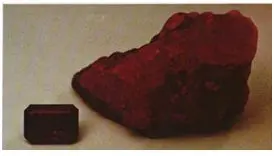
Zincite
Zincite is a rare mineral composed of zinc oxide. It is typically found in red, orange, or yellow colors and is uncommon in its natural form.
About
Zincite
In nature, zincite forms in oxidized zinc deposits, which are typically found in areas where zinc-rich ores have been exposed to oxygen over long periods. These environments are often associated with metamorphic or hydrothermal mineral deposits, where chemical reactions occur under specific temperature and pressure conditions. When zinc-bearing minerals such as sphalerite (ZnS) are exposed to oxygen, they undergo oxidation reactions. Over time, this process transforms the original sulfide minerals into oxide minerals, including zincite (ZnO). This transformation generally occurs near the Earth’s surface or in shallow subsurface environments, where oxygen and water can interact with the mineral deposits. However, the natural formation of zincite is extremely rare. This is because zinc oxide is not the most stable or common form of zinc under typical geological conditions. Instead, zinc is more frequently found in other mineral forms such as sulfides (like sphalerite), carbonates (like smithsonite), or silicates. The precise conditions required to form natural zincite—such as specific temperature ranges, oxygen availability, and chemical composition—are relatively uncommon in nature.
Physical & Chemical Properties
| Name | Zincite |
|---|---|
| Scientific Name | Zinc Oxide |
| Mineral Group | Oxide Mineral |
| Hardness (Mohs) | 4 – 4.5 |
| Color | Red, orange, yellow (sometimes green or colorless) |
| Origin | Formed in high-temperature environments, often as a byproduct of zinc smelting or in metamorphic deposits |
| Chemical Formula | ZnO |
Quick Facts
| Crystal System | Hexagonal |
|---|---|
| Specific Gravity | 5.4 – 5.7 |
| Birthstone | Not recognized |
| Refractive Index | 2.0 – 2.02 |
| Optical Character | Uniaxial (+) |
| Dispersion | High |
| Major Sources | Poland (primary), USA, Germany |
| Treatments | Typically untreated |
| Price Range | $10 - $40 |
| Care Instructions | Clean gently with a soft cloth; avoid water, chemicals, and ultrasonic cleaners; store carefully to prevent damage |