
Emerald
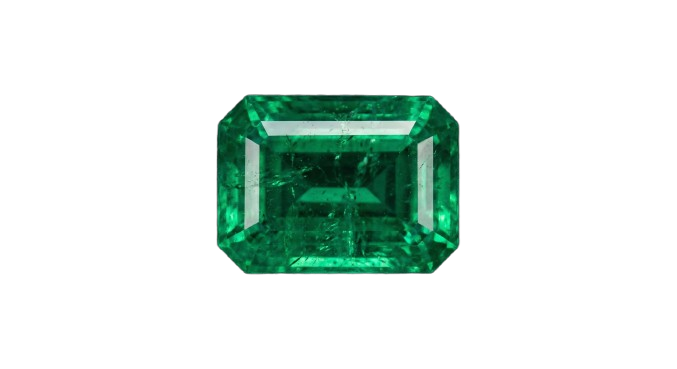
Emerald is a precious green gemstone prized for its rich color and association with wisdom, growth, and prosperity. It has been treasured since ancient times and remains one of the most valuable gemstones in the world.
About
Emerald
Emerald is the green variety of the mineral beryl, colored primarily by chromium and sometimes vanadium. Unlike ruby and sapphire, emeralds typically contain natural inclusions known as jardin, which are accepted as part of the stone’s character. High-quality emeralds are rarer than diamonds, and fine specimens command premium prices. Historically favored by royalty and scholars, emerald symbolizes renewal, harmony, and intellect.
Physical & Chemical Properties
| Name | Emerald |
|---|---|
| Scientific Name | Beryl (Green Variety) |
| Mineral Group | Silicate (Beryl Group) |
| Hardness (Mohs) | 7.5 – 8.0 |
| Color | Bluish Green |
| Origin | Colombia, Zambia, Brazil, Zimbabwe, and Afghanistan. |
| Chemical Formula | Be₃Al₂Si₆O₁₈ |
Quick Facts
| Crystal System | Hexagonal |
|---|---|
| Specific Gravity | 2.67 – 2.78 |
| Birthstone | May |
| Refractive Index | 1.565 – 1.602 |
| Optical Character | Uniaxial (–) |
| Dispersion | 0.014 |
| Major Sources | Colombia, renowned for the world’s finest emeralds; Zambia, known for darker bluish-green emeralds; along with Brazil and Zimbabwe. |
| Treatments | Common treatments include oil treatment (very common) and resin or polymer filling, typically used in lower-quality stones. |
| Common Enhancements | Common enhancements include cedar oil or colorless oil to improve clarity, along with fracture filling, which must always be disclosed. |
| Price Range | ₹5,000 - ₹10,00,000+ |
| Durability | Moderate durability |
| Care Instructions | Clean gently with lukewarm water and mild soap, avoid ultrasonic or steam cleaners, keep away from harsh chemicals and heat, and store separately in a soft pouch to prevent damage. |